At Erasmus MC, radiology is more than a diagnostic tool. It drives research, innovation, and patient care.
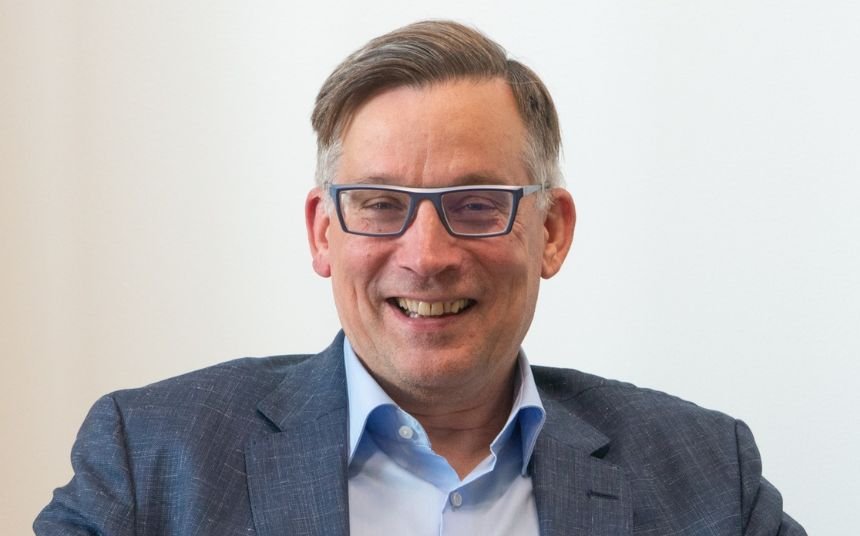
For Aad van der Lugt, Professor and Head of the Department of Radiology & Nuclear Medicine, this evolution has been a constant throughout his career. He first arrived as a medical student and later returned to complete his PhD and residency. Today, he leads one of the hospital’s largest and most dynamic departments, where clinical practice, research, and leadership come together.
“Over the past decades, radiology has evolved from analogue film-based imaging to fully digital systems and, more recently, the integration of artificial intelligence and advanced data analysis,” Van der Lugt says. “The next challenge is using all the information in the images and beyond the image to arrive at a proper diagnosis.”
Despite rapid change, he is clear about one thing: “Imaging technology will continue to play a central role in healthcare, and it is our task to improve it and support its utilisation.”
A hub of innovation and expertise
This continuous evolution is closely tied to the department’s role as a hub for innovation. “Academic hospitals,” Aad emphasizes, “are not just adopters of new technology, they are active contributors to its development.” “Industry has helped bring technology to healthcare, including AI, and as an academic institute, it is our role to guide its use so it truly benefits patients.”
With over 400 staff, the department combines clinical care, research, and technological development across multiple disciplines. This expertise supports ambitious goals across a broad clinical and research portfolio. Aad emphasizes shortening image acquisition, improving and validating imaging technology in practice, and integrating new imaging techniques into both research and patient care.
A collaborative mindset underpins the department’s strategy. “If an existing research group outside the department is already strong in a specific disease topic, adding imaging technology allows both sides to benefit,” Van der Lugt explains. “Imaging is nothing without the clinical information provided by our partners.”
Collaboration and technology
Collaboration is not just a principle; it shapes daily practice. From refining image acquisition to testing new technologies in the clinic, every advancement is evaluated for its impact on patients. ‘’At the same time, imaging is taking on new roles like supporting prognosis, therapy evaluation, and artificial intelligence is increasingly central to these developments.’’
“There’s a clear trend in the imaging industry to simplify care pathways and reduce time through one-stop approaches,” Van der Lugt says. “Instead of performing sequential imaging procedures like X-ray, CT, and MRI, we aim to refer patients to the right technology from the start. By combining this with AI to optimize workflow, we save time and could improve outcomes.”
Nurturing talent
Sustaining this level of innovation requires investment in people. Talent development, therefore, plays a key role in the department’s long-term vision. Since 2023, a formal development plan has provided the research talent a personalized growth path, from postdocs to assistant and associate professors, with a strong focus on both personal and professional development.
“Talent attracts talent,” Van der Lugt says. “We support promising researchers, send them abroad for experience, and welcome them back. Even if someone doesn’t move to a new position, they can still develop skills and contribute meaningfully to our patient care and research.”
Translating research into patient impact
The focus on innovation and talent ultimately translates into impact for patients. The department is proud of its translational achievements, particularly in nuclear medicine, where advances have improved treatments for malignant tumors. Collaboration with industry partners such as Siemens Healthineers, Philips Healthcare, and GE HealthCare enables co-creation of technology that can be directly applied in clinical practice. These partnerships demonstrate how research, industry, and clinical care intersect to deliver tangible improvements.
Public-private partnerships further strengthen this ecosystem. Through the Innovation Center for Artificial Intelligence (ICAI) labs, which unite academic institutions, industry, and healthcare providers, teams develop and implement AI in clinical settings. At Erasmus MC, the Stroke Lab (in collaboration with Philips Healthcare) focuses on improving outcomes for stroke patients, while the Trustworthy AI for Magnetic Resonance Imaging (TAIMRI) Lab (in collaboration with GE HealthCare) enhances MRI-based diagnosis using AI methods. “Our teams are also successful in attracting national and European research funding, supporting both innovation and clinical translation,” Aad adds.
Precision care: minimally invasive treatments and theranostics
The department’s ambitions are also reflected in its approach to treatment. There is a clear shift towards minimally invasive therapies, which are safer for patients, can often be repeated, and are more cost-effective. “You can see a clear shift towards minimally invasive treatments,” Van der Lugt explains. “Not only in cardiovascular disease, but increasingly in oncology as well.”
Theranostics takes this a step further by combining diagnostics and therapy in one integrated approach, enabling more precise and personalized care. Industry is increasingly moving in the same direction, recognizing the benefits for patients. “Minimally invasive treatments and theranostics are the future,” Van der Lugt emphasizes. “They reduce burden for patients, improve outcomes, and help us deliver more personalized care.”
Building the Rotterdam ecosystem
Looking ahead, that same focus on collaboration remains central. Aad sees strong potential in further strengthening connections between academia and industry, particularly within the Rotterdam ecosystem.
“Rotterdam Square can play an important role by creating spaces where academic and industrial partners meet, share expertise, and co-develop new technologies,” he says. “This is a task no single person can do alone. We need a collaborative environment to find the right partnerships and bring together expertise. Rotterdam Square can facilitate that.”
Rotterdam is set to become a hub for HealthTech innovation. With concentrated expertise at Erasmus MC, a campus master plan underway, and a new incubator opening on site in 2027, the city will bring together research, clinical care, and industry partnerships.
“We have the knowledge, the skills, and the ambition to lead,” Van der Lugt concludes. “Now it’s about making it happen, for our patients and for the future of healthcare.”
To learn more about the Department of Radiology and Nuclear Medicine, visit the website. If you’re looking for research collaboration, industry partnerships, or want to engage with the Rotterdam ecosystem, please reach out to our Senior Account Manager Sharon Mullen.
Date: April 4, 2026